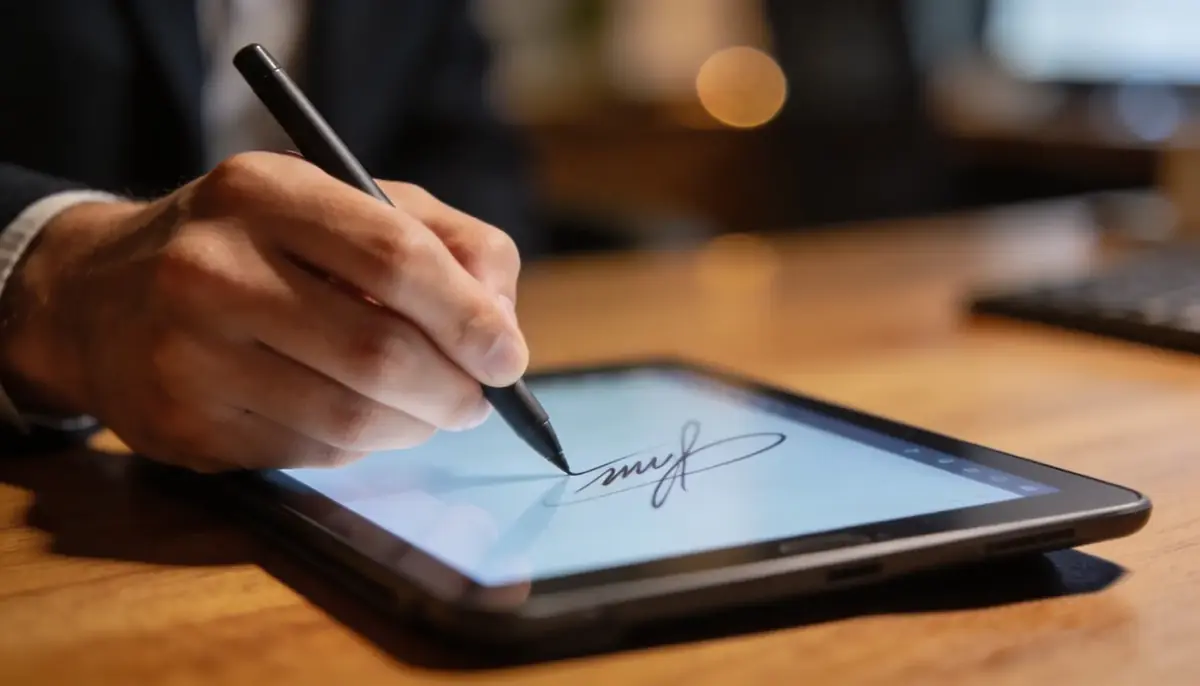
What Are the Three Types of Electronic Signatures?
Not all e-signatures work the same way. The differences matter for legal validity and security.
- Simple Electronic Signature (SES) - A drawn, typed, or uploaded image of your signature placed on a PDF. No identity verification. Accepted for most everyday documents like internal approvals, freelance contracts, and permission slips.
- Advanced Electronic Signature (AES) - Linked to the signer through a digital certificate. Provides tamper detection - if someone edits the document after signing, the signature breaks. Used in business contracts and regulated industries.
- Qualified Electronic Signature (QES) - Created with a government-issued digital ID and a certified device. Legally equivalent to a handwritten signature in the EU. Required for real estate transactions, court filings, and notarized documents in some countries.
Legal Validity by Region
| Region | Law | SES accepted? | QES required for |
|---|---|---|---|
| United States | ESIGN Act + UETA | Yes, for most documents | Not required (no QES framework) |
| European Union | eIDAS Regulation | Yes, for most documents | Real estate, court filings |
| United Kingdom | Electronic Communications Act | Yes, for most documents | Deeds, land registry |
| Canada | PIPEDA + provincial laws | Yes, for most documents | Varies by province |
| Australia | Electronic Transactions Act | Yes, for most documents | Wills, real property transfers |
Key takeaway: Simple electronic signatures are legally valid for 90%+ of everyday documents in most countries. Wills, notarized deeds, and certain government filings still need wet ink or qualified signatures.
Step-by-Step: Sign a PDF with PDFViz
- Open the Sign PDF tool and upload your document.
- Choose your signature method: draw with your mouse or trackpad, type your name, or upload an image of your signature.
- Click on the document where the signature should go. Resize and reposition as needed.
- Click Apply. The signed PDF downloads instantly.
Which Signature Method Should You Use?
- Draw - Looks natural and personal. Hard to reproduce exactly the same way twice. Best for one-off documents.
- Type - Clean, legible, consistent every time. Best for high-volume signing.
- Upload image - Sign a white paper once, photograph it, and reuse across all documents. Best for brand consistency.
After Signing: Protect Your Document
A signed PDF without protection can be edited. Someone could move your signature, change the text, or delete pages. Lock the document down:
- Add a password with the Protect PDF tool. Use the owner password to block editing while allowing viewing.
- Add a "Signed" watermark to make the document’s status visible on every page.
- Save a copy with the original date in the filename (e.g., contract_signed_2024-03-15.pdf) for your records.
PDFViz vs. E-Signature Platforms
| Feature | PDFViz | DocuSign / HelloSign | Adobe Sign |
|---|---|---|---|
| Signature type | Simple (SES) | Simple + Advanced | Simple + Advanced |
| Cost | Free | $10-25/month | $13-23/month |
| Privacy | File stays on device | Uploaded to server | Uploaded to server |
| Multi-party signing | No (single signer) | Yes | Yes |
| Audit trail | No | Yes | Yes |
| Account required | No | Yes | Yes |
Use PDFViz when you need to sign a document yourself - freelance contracts, permission forms, internal approvals. Use DocuSign or Adobe Sign when you need multiple parties to sign the same document with an audit trail.
How Do You Keep Signed Documents Private?
Contracts, NDAs, and financial agreements contain information you do not want on someone else’s server. Our signing tool processes everything in your browser. Your document and signature never leave your device - no upload, no cloud storage, no third-party access. Close the tab and all data is gone.